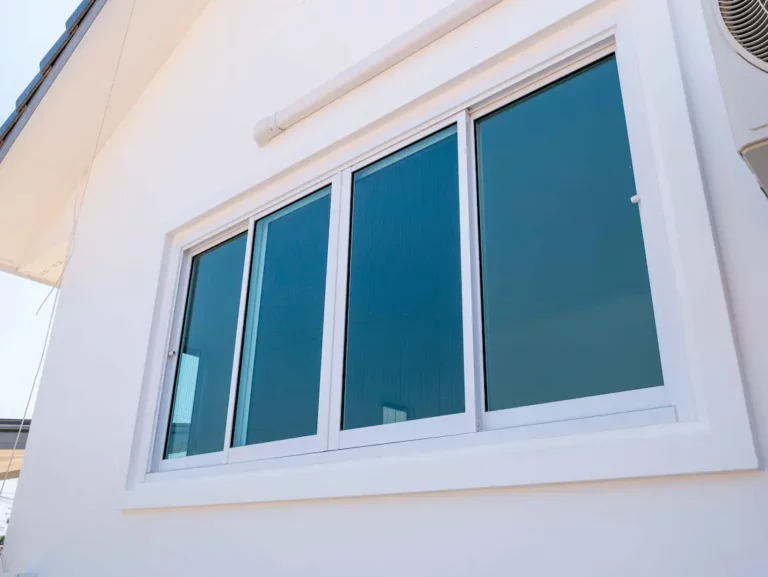
Window installation guide
Window Installation Methods: Insert, Full-Frame and Why Installation Matters
A great window installed badly will leak, draft and stick. Here’s how replacement windows go in, how to tell which method fits your home, and what a careful installation looks like in a climate as wet as ours.
The short answer
There are two main ways to replace a window: an insert (pocket) installation, where the new window fits inside the existing frame, and a full-frame installation, where the old window is removed down to the rough opening. Insert works when the existing frame is solid and square. Full-frame is the better choice when there’s rot, water damage, or you want to change the size or style of the opening.
Whichever method you use, the installation is what decides whether the window performs: level and square, sealed and flashed so water drains out, insulated around the frame, and finished cleanly inside and out.
Insert vs. full-frame installation
Most of the replacement windows we install in the Portland area go in one of two ways. Neither is “better” in every case; the right one depends on what’s behind your old window.
| Insert (pocket) | Full-frame | |
|---|---|---|
| What stays | The existing frame and interior trim | Nothing: removed to the rough opening |
| Best when | The frame is solid, dry and square | There’s rot, leaks or you’re changing the opening |
| Glass area | Slightly smaller (the new frame sits inside the old one) | Same or larger |
| Disturbance | Less: trim and siding usually untouched | More: exterior trim or siding is opened up |
| Lets you inspect | Only what’s visible | The framing and the flashing around the opening |
| Cost | Usually lower | Usually higher |
For a deeper look at the insert method, see our guide to sash pocket installation.
Nail-fin and block-frame windows
Nail-fin (flange) windows
New-construction windows usually have a nailing fin around the outside of the frame that’s fastened to the wall framing and lapped into the house wrap. In a full-frame replacement or a new opening, a nail-fin window gives the strongest weather seal, because the flashing tapes and the weather barrier can be tied directly to it. It does mean opening the siding around the window.
Block-frame windows
A block-frame window has no fin. It sets into an existing opening and is fastened through the frame. It’s common in brick, stucco or masonry walls, where you don’t want to cut into the exterior finish, and in some full-frame jobs where the siding is staying.
Adding a window or enlarging an opening is a different job from replacing one. If that’s what you’re planning, see window installation for new openings and egress windows.
How to choose the right method for your home
- Check the old frame. Soft wood, peeling paint around the sill, stains on the drywall below the window or a frame that’s out of square point to full-frame.
- Think about the opening. If you want a bigger window, a different shape or a patio door where a window was, it’s a full-frame (or new-opening) job.
- Consider the exterior. Brick and stucco favor insert or block-frame windows. Siding that’s due for replacement is a good time for full-frame.
- Older homes need care. Homes built before 1978 may have lead paint, so the work must follow lead-safe practices. Our older-home window guide covers what’s different.
A good installer should look at each window, not just the house, and explain why they recommend one method over the other. On many homes the answer is a mix.
What a proper installation includes
Portland gets most of its rain from fall through spring, and water that gets behind a window frame does slow, hidden damage. These are the steps that keep it out:
- Measure each opening. Replacement windows are made to order, so every opening is measured carefully for width, height and square.
- Protect the house. Floors and furniture near the work area are covered before anything comes out.
- Prepare the opening. Old sash, weights and loose material come out; the sill and frame are checked for rot and repaired or replaced as needed.
- Flash and seal. Sill pans and flashing direct water out and away, lapped so water always runs over a layer, never behind it.
- Set the window level, plumb and square, shimmed and fastened so the sash operates smoothly and locks properly.
- Insulate the gap between the window and the framing with low-expansion foam or backer rod, so the frame isn’t bowed.
- Finish the trim inside and out and seal the exterior with a quality sealant.
- Test and clean up. Every window is opened, closed and locked, the site is cleaned and the work is walked through with you.
Why installation matters as much as the window
Window makers test their products in a lab. Your house isn’t a lab, and most problems homeowners blame on a window, like drafts, leaks, condensation on the frame or a sash that sticks, start with how it was installed.
- Leaks and rot: a gap in the flashing or sealant can let water into the wall for years before it shows inside.
- Drafts and comfort: poorly insulated gaps around the frame undo much of what a well-insulated window gives you.
- Operation and security: a window that’s out of square won’t lock tightly or slide easily.
- Warranty: manufacturers can deny claims for windows that weren’t installed to their instructions.
That’s why our work is backed by a lifetime craftsmanship warranty and a leak-free guarantee, on top of the manufacturer’s warranty on the window.
Safety, security and egress
Installation also affects safety. New windows lock more securely than worn-out ones, and laminated or tempered glass can be specified where codes require it or where you want extra protection. In bedrooms, the building code requires an emergency escape opening; when a replacement changes the window style or size, it needs to keep or improve that opening. Casement windows are a common choice because they open fully. For homes with young children, window opening control devices can limit how far a window opens while still allowing escape.
Questions to ask any window installer
- Are you licensed and insured? (In Oregon, check the CCB number; in Washington, the L&I contractor license.)
- Will you use insert or full-frame on each window, and why?
- How do you flash and seal the opening?
- Who does the installation, and who do I call if something goes wrong later?
- What does your workmanship warranty cover, and for how long?
- Are you EPA lead-safe certified for homes built before 1978?
Clear Choice has installed windows across the Portland area since 2002 (OR CCB #152050, WA #CLEARCW923BW). If you’d like us to look at your windows and recommend a method, request a free in-home quote.
An insert (pocket) replacement fits a new window inside the existing frame and leaves the trim in place. A full-frame replacement removes the old window down to the rough opening, so the framing and flashing can be inspected and replaced. Insert is less invasive; full-frame is the right choice when there’s rot or the opening is changing.
Slightly. Because the new frame sits inside the old one, you lose a little glass area on each side. How much depends on the window and the frame material. If keeping every inch of glass matters, full-frame is the better choice.
Press a screwdriver into the sill and the bottom corners of the frame. If it sinks in easily, the wood is soft. Peeling paint, dark stains, swelling or water marks on the wall below the window are other signs. We check every frame during the in-home visit.
Yes. Windows are installed one opening at a time, so each one is open only briefly, and the house is protected while we work. Sealants that need warmer temperatures can be chosen or scheduled for the conditions.
It can. Manufacturers require their windows to be installed to their instructions, and a poor installation can void the window warranty. Our installation is covered separately by our lifetime craftsmanship warranty and leak-free guarantee.
It depends on the city and the scope. A same-size replacement often doesn’t need one, while changing the size of an opening, structural work or egress changes usually does. We’ll tell you what your project needs.
Want an honest recommendation for your windows?
Free in-home consultation. Financing available, subject to credit approval.
- One clear, written price
- Lifetime craftsmanship warranty and leak-free guarantee
- Call us: (503) 643-3887
Free in-home quote
Takes about a minute. No pressure, no obligation.