
Door buying guide · Portland metro
Door materials: fiberglass, steel, wood, vinyl and aluminum
How the five main door materials compare in Portland weather, what each one costs to own, and which doors we install in each, from a local company that has replaced entry and patio doors since 2002.
Lifetime craftsmanship warranty · Leak-free guarantee
Which door material is best?
For most Portland front doors, we recommend fiberglass: it looks like stained wood or smooth paint, insulates well and won’t warp, swell or rot in our rain. Steel is the strong, budget-friendly choice. Wood is beautiful and right for many older homes, as long as the door sits under a porch or overhang. For patio doors, vinyl sliders are the value pick, fiberglass sliders and French doors are the upgrade, and aluminum frames make the big multi-slide glass walls possible.
Fiberglass
Best for: Most front doors
Looks like wood or smooth paint; no rot or warping
Door materials compared
Relative cost compares doors of the same type and size, installed. Glass, sidelites, transoms, finish and hardware move the price as much as the material does.
| Material | Best for | Look | Upkeep | Relative cost | What we install |
|---|---|---|---|---|---|
| Fiberglass | Front doors, French and sliding patio doors | Realistic wood grain or smooth paint | Low: wipe clean; refresh stain or paint every several years | $$ | ProVia Signet and Vantage, Therma-Tru, Infinity from Marvin patio doors |
| Steel | Front, side and garage-entry doors; modern homes | Smooth painted finish | Low: touch up scratches so they don’t rust | $ | ProVia Legacy, Therma-Tru steel |
| Wood | Covered entries, craftsman and historic homes, interiors of patio doors | Real wood in many species | Higher: refinish regularly, protect from sun and rain | $$$ | Simpson wood doors, Marvin wood patio doors |
| Vinyl | Sliding patio doors | White and a few colors | Very low | $ | Milgard Tuscany and Trinsic series |
| Aluminum | Large multi-slide and folding glass walls | Slim, modern frames | Low | $$$$ | Milgard AX650 moving glass wall |
Our most popular entry door
Fiberglass doors
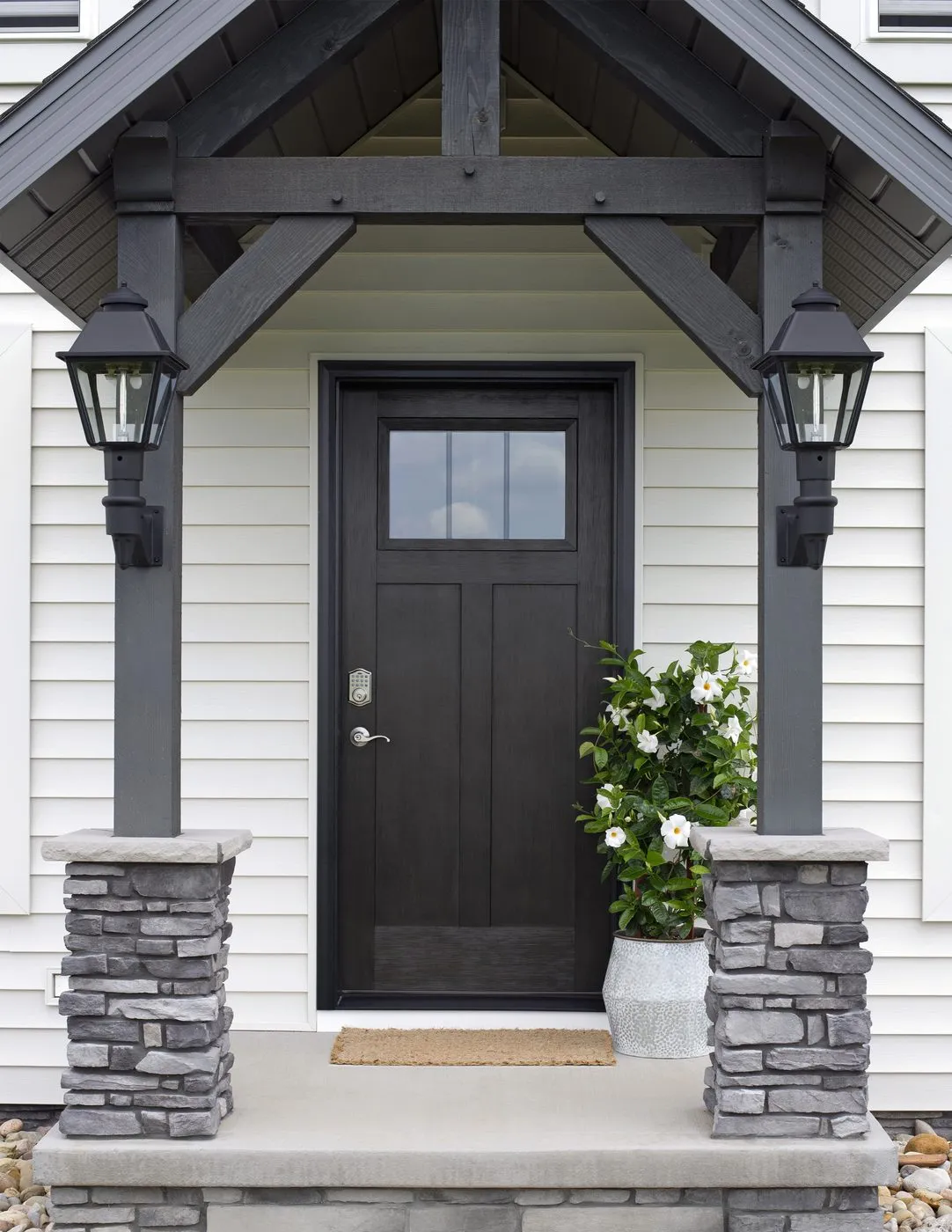
Fiberglass is the door we install most on Portland-area homes. It’s molded with a realistic wood grain, like oak, cherry or fir, that takes a stain, or with a smooth skin you can paint any color. Around an insulated foam core, it won’t warp, swell, crack or rot the way an old wood door does in our wet winters.
For front doors we install ProVia’s Signet line, built to order in custom sizes, and ProVia Vantage, in a white oak wood grain or smooth finish with more than 30 styles, plus Therma-Tru fiberglass doors. For patio openings, Infinity from Marvin makes fiberglass sliding and French doors to match its windows.
- Looks like stained wood or smooth paint
- Insulated core; holds up to sun and rain
- Resists dents better than steel
- Built to order in custom sizes (ProVia Signet)
Keep in mind: A wood-grain finish needs a fresh coat of stain or clear coat every several years on a door that takes full sun.
See also: ProVia doors · Hinged and French patio doors · Sliding patio doors
ProVia Signet fiberglass entry door. Photo: ProVia.
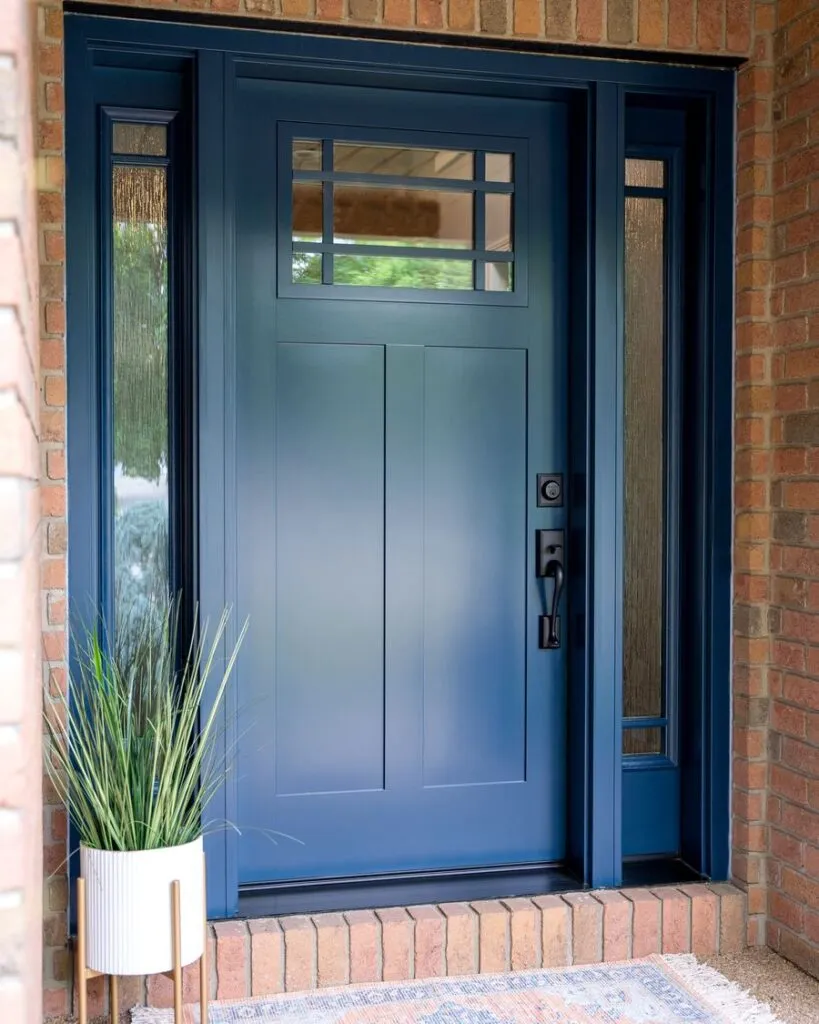
ProVia Legacy steel entry door. Photo: ProVia.
Strong, secure and budget-friendly
Steel doors
A steel door is a steel skin over an insulated core. It’s the most affordable way to get a solid, secure, energy-efficient entry door, and its smooth painted finish suits modern, farmhouse and traditional homes alike.
We install ProVia Legacy steel doors, in bold factory colors like Coal Black and Snow Mist, and Therma-Tru steel doors. Steel is a popular choice for side doors, garage-entry doors and homes where security comes first.
- Lowest cost for an insulated entry door
- Strong and secure
- Smooth, crisp painted finish
- Great for side and garage-entry doors
Keep in mind: Steel can dent, and a deep scratch should be touched up so it doesn’t rust. It doesn’t carry a convincing wood grain the way fiberglass does.
See also: ProVia doors · All doors
Real wood for the right opening
Wood doors
Nothing looks quite like a real wood door, and on many older Portland homes it’s the right choice. We install wood entry doors from Simpson Door Company, in species like Douglas fir, Sapele mahogany and Nootka cypress, including constructions engineered for exposed openings, and Marvin wood and wood-clad patio doors.
Wood does best under a covered porch or a deep overhang. A wood door that takes direct rain and afternoon sun needs regular refinishing, and without it the finish breaks down and the wood can swell, check or rot. If your entry is exposed, we’ll show you fiberglass doors with a wood grain that look the part with far less upkeep.
- The real thing: natural grain and warmth
- Many species, stains and custom designs
- Fits craftsman, historic and high-end homes
- Wood interiors pair with wood trim inside
Keep in mind: Plan on refinishing a wood door regularly, and choose it only where a porch or overhang protects it.
See also: Hinged and French patio doors · Older and historic homes
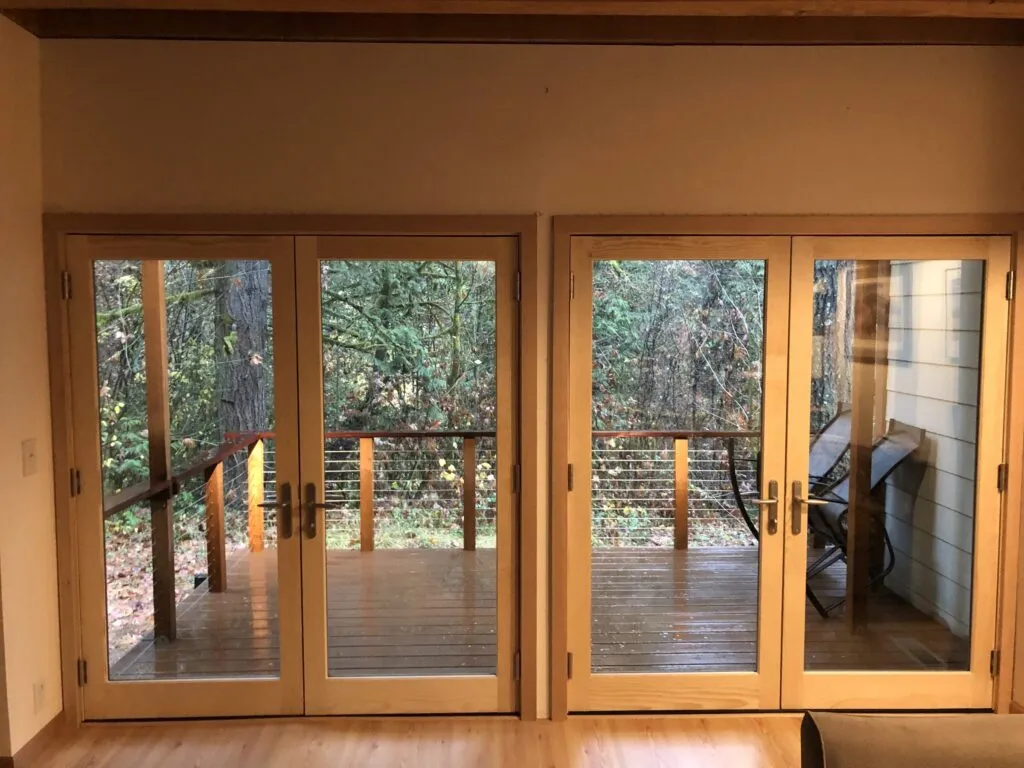
Wood-interior French doors, Banks.
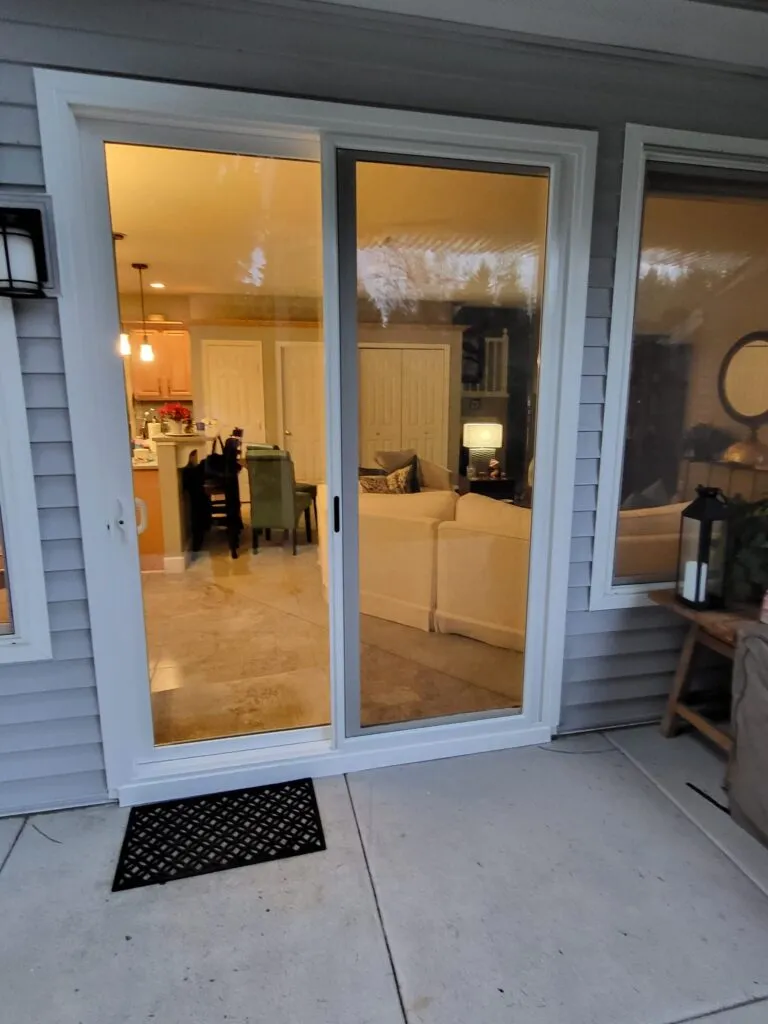
Sliding patio door, Vancouver, WA.
The value choice for sliders
Vinyl patio doors
Vinyl is used for sliding patio doors rather than front doors. A vinyl slider is affordable, energy-efficient and close to maintenance-free: it never needs paint, and it won’t rust or rot. It’s the most common upgrade from an old aluminum slider that sweats, sticks and lets in cold air.
We install Milgard vinyl patio doors, including the Tuscany and Trinsic series, backed by Milgard’s warranty.
- Most affordable patio door
- No painting; won’t rust or rot
- Energy-efficient glass packages
- A clear step up from old aluminum sliders
Keep in mind: Vinyl frames are wider than fiberglass, so you see a bit less glass, and dark exterior colors are limited.
See also: Sliding patio doors · Milgard windows and doors
For wide-open glass walls
Aluminum doors
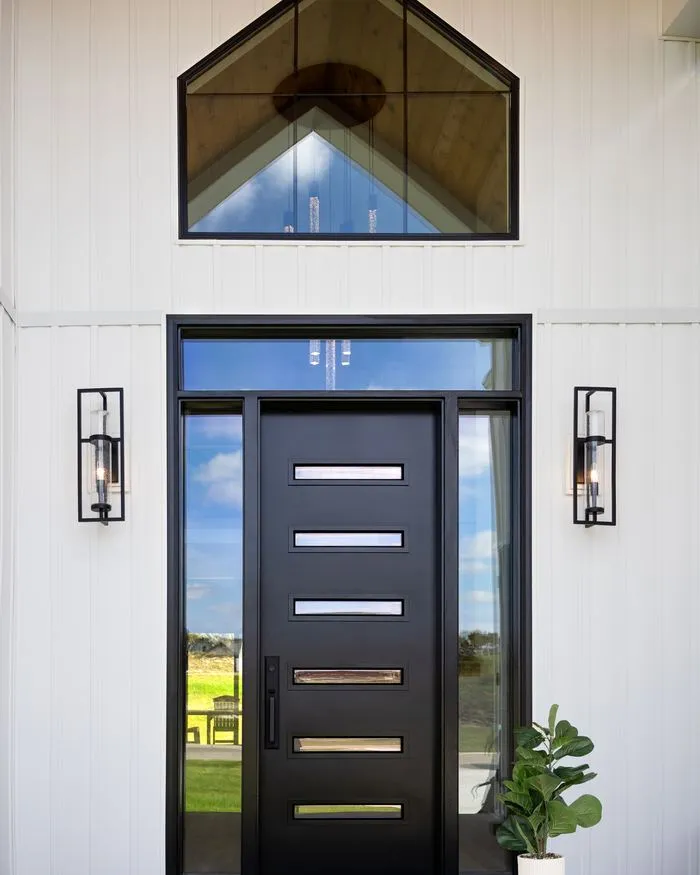
Aluminum is strong enough to carry very large panels of glass with slim frames, which is why it’s used for multi-slide and folding glass walls that open a whole room to the outdoors. We install the Milgard AX650 moving glass wall for these openings, and Infinity from Marvin fiberglass bi-fold doors as an alternative.
Older aluminum sliding doors are a different story: many from the 1970s and 80s have no thermal break, so they feel cold and drip with condensation in winter. Replacing them with vinyl or fiberglass is one of the most common door projects we do.
- Slim frames, maximum glass
- Strong enough for very large panels
- Clean, modern look
- Opens a whole wall to the patio
Keep in mind: Big glass walls are a remodel project: they usually need a new header and framing, which we plan with you.
See also: Large opening doors · Bifold patio doors

Milgard AX650 moving glass wall. Photo: Milgard.
How to choose
Sun and rain
A south- or west-facing door with no overhang takes the most weather. Choose fiberglass or steel there, and save wood for covered entries.
Your home’s style
Wood-grain fiberglass or real wood suits craftsman and older homes; smooth fiberglass and steel suit modern and farmhouse styles.
Security
Fiberglass and steel doors with a solid frame and multi-point or upgraded locks are the most secure. The frame matters as much as the door.
Budget and upkeep
Steel and vinyl cost least up front. Fiberglass costs more but needs little care. Wood costs the most to buy and to keep up.
Whatever the material
The installation matters as much as the door
Most door leaks, drafts and sticking start at the frame and sill, not the slab. We replace the whole unit and seal it properly, and every installation is backed by our lifetime craftsmanship warranty and leak-free guarantee, on top of the manufacturer’s warranty.
See door materials side by side at our Tigard showroom: ProVia, Therma-Tru and Simpson door slabs, an Infinity sliding door and French door, and a Milgard multi-slide door. Please call ahead.
- Inspection of the opening: frame, sill and wall checked for rot before anything is ordered
- A door built to fit, measured on site
- Flashing, a sealed sill and new weatherstripping to keep rain and drafts out
- New trim as needed, hardware installed and adjusted, old door hauled away
For most homes, fiberglass. It looks like wood or smooth paint, insulates well and won’t warp or rot in our rain. Steel is the budget-friendly alternative, and real wood is a good choice under a covered porch.
Fiberglass resists dents, carries a convincing wood grain and holds up well in full sun. Steel costs less and is very secure, but it can dent and a deep scratch needs touching up. Both have insulated cores.
Yes, when they’re protected. A wood door under a porch or deep overhang can last for decades with regular refinishing. On an exposed entry, rain and sun break down the finish quickly, so we usually recommend fiberglass there.
Yes. Wood-grain fiberglass doors like ProVia Signet are molded from real wood patterns, such as oak, cherry and fir, and take a stain, so most people can’t tell from the street.
We don’t use vinyl for front doors. Vinyl works well for sliding patio doors, where it’s affordable and low-maintenance. For entry doors we install fiberglass, steel or wood.
Fiberglass and steel doors with insulated foam cores insulate better than solid wood. The glass matters too: more glass and simpler glass packages let more heat through, so we help you balance light and efficiency.
It depends on the material, size, glass, sidelites or transom, finish and hardware. As a guide, sliding patio doors typically run $3,000 to $8,000 installed and hinged or French patio doors $5,000 to $12,000. After a free in-home estimate, we give you one clear, written price.
Keep exploring doors
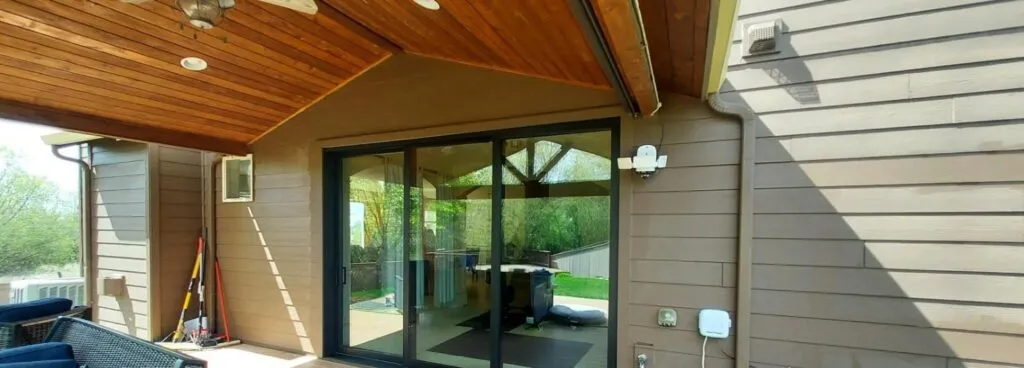
Sliding patio doors
Vinyl and fiberglass sliders.

Hinged and French patio doors
Swinging doors to your deck or yard.
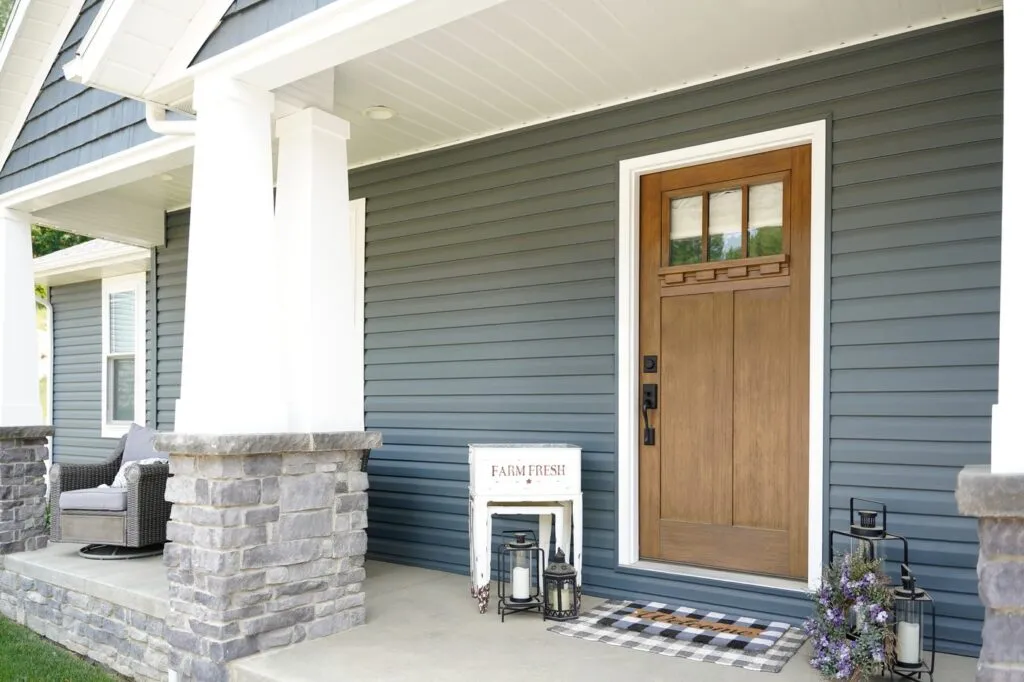
ProVia doors
Our primary entry door line.
Also see all doors · door styles · large opening doors · door replacement in Portland.
Ready for a new door?
In-home consultations and clear, written estimates. Financing available, subject to credit approval.
- One clear, written price
- Lifetime craftsmanship warranty and leak-free guarantee
- Call us: (503) 643-3887
Free in-home quote
Takes about a minute. No pressure, no obligation.